
Ayurvedic Piles Treatment in Kathmandu, Nepal
Piles, also called hemorrhoids, are enlarged or symptomatic hemorrhoidal tissues around the anus or lower rectum. They may cause bleeding during bowel movements, anal itching, swelling, prolapse, discomfort or a painful lump.
Nepal Ayurveda provides Ayurvedic piles treatment in Kathmandu from its Balkhu location. Care begins with clinical assessment rather than assuming every anal symptom is caused by hemorrhoids. Depending on the type and severity of piles, management may involve bowel-habit and dietary changes, individualized Ayurvedic medicines, supportive measures, Kshara Karma or Kshara Sutra procedures for selected patients.
What are piles?
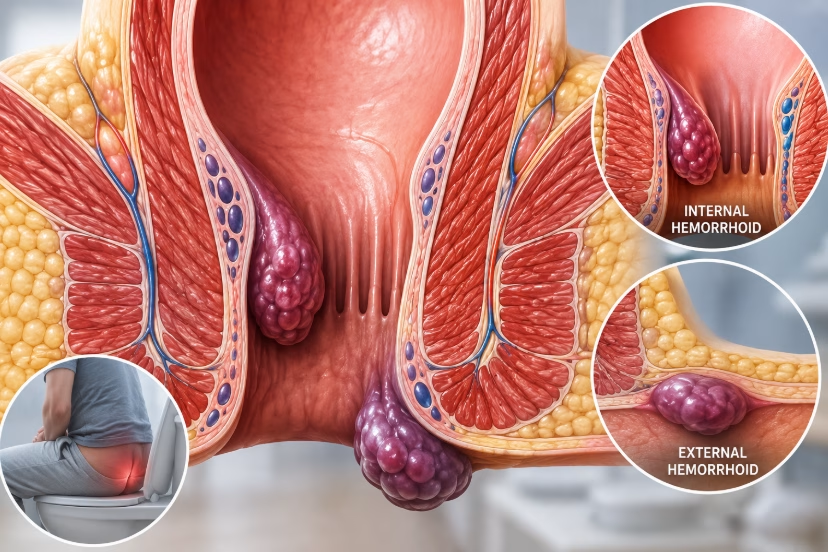
Piles, or hemorrhoids, involve hemorrhoidal tissue around the anus and lower rectum becoming enlarged or symptomatic. Internal hemorrhoids develop inside the anal canal, while external hemorrhoids occur beneath the skin around the anus.
Not everyone with hemorrhoidal tissue requires treatment. Treatment is generally considered when symptoms such as bleeding, prolapse, irritation, discomfort or pain affect daily life or require medical attention.
In Ayurveda, hemorrhoids are traditionally discussed under Arsha. Ayurvedic management is selected according to the patient’s clinical findings and may include measures directed at bowel habits and constipation, medicines or procedures such as Kshara Karma and Kshara Sutra where appropriate.
What symptoms can piles cause?
Symptoms depend on whether hemorrhoids are internal, external or prolapsed.
Common symptoms may include:
- bright-red bleeding during or after bowel movements
- itching or irritation around the anus
- swelling or a lump near the anus
- prolapse of tissue during bowel movements
- discomfort or pain
- mucus discharge or difficulty cleaning after passing stool
Internal hemorrhoids commonly cause bleeding or prolapse, whereas thrombosed external hemorrhoids can cause significant pain and a tender lump.
Rectal bleeding should not automatically be assumed to be piles
Bleeding can occur with hemorrhoids, but it can also occur with other gastrointestinal conditions. Both NIDDK and colorectal guidance emphasize the importance of evaluating rectal bleeding rather than self-diagnosing it as hemorrhoids.
For that reason, Nepal Ayurveda’s piles pathway should begin with clinical assessment.
What are the different types and grades of piles?
Internal piles
Internal hemorrhoids arise inside the anal canal and are commonly classified according to prolapse.
Grade I: no prolapse outside the anus.
Grade II: prolapses during straining but returns inside spontaneously.
Grade III: prolapses and usually needs to be manually pushed back.
Grade IV: remains prolapsed and cannot normally be pushed back inside.
The grade helps guide treatment, but symptoms, bleeding, external disease and individual health factors are also important.
External piles
External hemorrhoids develop beneath the skin around the anus. They may cause swelling, irritation or discomfort. A clot can sometimes develop within an external hemorrhoid, producing a painful thrombosed hemorrhoid.
Because internal and external hemorrhoids behave differently, the treatment that is suitable for one patient may not be appropriate for another.
When should you consult a doctor for piles?
Arrange a clinical assessment when you experience persistent or recurring rectal bleeding, prolapse during bowel movements, recurrent anal swelling, persistent itching, painful lumps or symptoms that continue despite improving your bowel habits.
You should also seek evaluation if you are unsure whether your symptoms are actually caused by piles.
A useful symptom-to-action guide
| Situation | Appropriate next step |
|---|---|
| Occasional mild symptoms associated with hard stool | Improve bowel habits and seek assessment if persistent |
| Recurrent bright-red rectal bleeding | Medical evaluation |
| Tissue protrudes during bowel movement | Examination and hemorrhoid grading |
| Persistent anal lump/swelling | Clinical assessment |
| Severe pain | Prompt evaluation |
| Bleeding with abdominal pain, diarrhea or fever | Urgent medical care |
| Unexplained recurrent bleeding | Do not assume piles; obtain professional evaluation |
NIDDK advises seeking medical care promptly for severe anal pain and rectal bleeding, particularly when accompanied by abdominal pain, diarrhea or fever.
How are piles evaluated?
Treatment should be based on diagnosis rather than symptoms alone.
The consultation usually begins with questions about bleeding, bowel movements, constipation, pain, prolapse, diet, previous treatment, medicines and other medical conditions.
A doctor may then examine the anal area and, when clinically appropriate, perform a rectal examination. Standard medical assessment of suspected internal hemorrhoids may also involve anoscopy or other investigations when indicated.
What treatment options are available for piles?
There is no single treatment that is right for every patient. The approach depends on whether the hemorrhoids are internal or external, their grade, bleeding, prolapse, pain, previous treatment and the patient’s overall health.
Diet and bowel-habit management
Improving bowel habits is an important part of hemorrhoid care.
Medical guidelines recommend adequate dietary fiber, fluids and reduction of straining. Spending excessive time sitting on the toilet may also contribute to symptomatic hemorrhoids.
At Nepal Ayurveda, lifestyle advice may therefore form part of the treatment plan even when a procedure is being considered.
This may include guidance on:
- preventing hard stools
- improving dietary fiber
- appropriate fluid intake
- reducing prolonged straining
- avoiding unnecessarily long toilet sitting
- maintaining regular bowel habits
- managing constipation
The exact advice should be individualized, particularly for people who have other medical conditions.
Ayurvedic medicines
Ayurvedic medicines may be considered as part of individualized management according to the doctor’s assessment.
They should not be presented as a universal cure or used as a reason to delay investigation of persistent rectal bleeding.
Patients should tell the doctor about all prescription medicines, over-the-counter medicines, supplements and herbal products they are already taking.
Sitz bath and local supportive care
Warm sitz baths are commonly used as a supportive measure to reduce discomfort in some patients with anorectal symptoms. Standard medical guidance also includes warm-water baths as part of conservative hemorrhoid care.
Supportive care does not replace evaluation when symptoms are persistent, severe or uncertain.
What is Kshara Karma for piles?
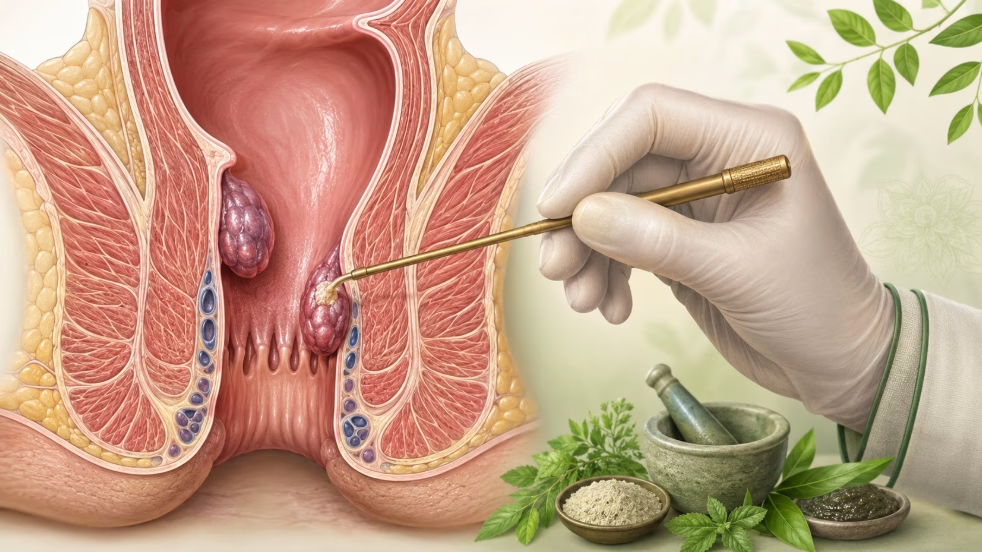
Kshara Karma involves the controlled clinical application of an alkaline Ayurvedic preparation to selected hemorrhoidal tissue. It is traditionally used within Ayurvedic Shalya practice and should only be performed after appropriate examination and patient selection.
It is not simply a herbal cream or home treatment.
A published open-label randomized clinical trial involving 50 patients evaluated Apamarga Kshara application against sclerotherapy in first- and second-degree internal piles. The results were encouraging for several clinical outcomes, but the study was relatively small and should not be interpreted as evidence that Kshara is superior or appropriate for every patient.
Another small study compared Apamarga Kshara application with infrared coagulation and an Ayurvedic oral intervention in first- and second-degree internal hemorrhoids. Again, the evidence is useful but limited in scale.
What is Kshara Sutra treatment for piles?
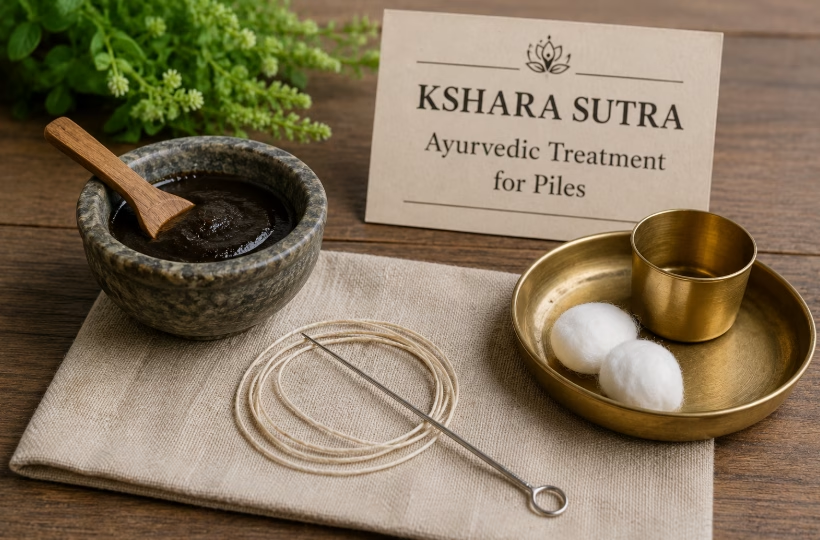
Kshara Sutra is an Ayurvedic para-surgical technique involving a specially prepared medicated thread. Nepal Ayurveda’s existing Kshara Sutra service specifically identifies hemorrhoids among the conditions for which the technique is used and describes ligation of selected pile tissue.
Published small studies have also evaluated Kshara Sutra ligation for hemorrhoids, including comparisons with rubber-band ligation and hemorrhoidectomy. These studies suggest clinical potential, but their sample sizes are limited and they do not establish suitability or expected outcome for every patient.
Kshara Karma vs Kshara Sutra
| Kshara Karma | Kshara Sutra |
|---|---|
| Controlled application of Kshara to selected tissue | Medicated thread is used for ligation in selected cases |
| May be considered for selected internal piles | May be considered when ligation is clinically appropriate |
| Selection depends on examination and severity | Selection depends on anatomy, grade and doctor assessment |
| Requires trained clinical application | Requires trained para-surgical technique |
| Not suitable for every patient | Not suitable for every patient |
Your doctor should determine which, if either, is appropriate.
Does every patient with piles need a procedure?
No.
Many patients can initially be managed with dietary measures, improved bowel habits and appropriate medical management. Current colorectal guidelines recommend dietary and behavioral modification as first-line treatment for many patients.
When symptoms persist, conventional medical options may include rubber-band ligation, sclerotherapy or infrared coagulation for selected internal hemorrhoids. Surgery may be considered for more significant or persistent disease.
Nepal Ayurveda’s treatment discussion should therefore include referral when a patient’s condition is better suited to another medical or surgical approach.
That transparency is an important part of safe clinical care.
What are the benefits and limitations of Ayurvedic piles treatment?
Potential advantages of an individualized Ayurvedic pathway may include combining bowel-habit management, diet, medicines and procedure-based options rather than relying on a single intervention.
Kshara-based procedures also offer an established Ayurvedic approach to selected anorectal conditions and have been examined in clinical research.
However, important limitations include:
- not every hemorrhoid is suitable for Kshara
- results vary between patients
- recurrent symptoms are possible
- bleeding may have another cause
- additional tests may be needed
- another procedure or referral may sometimes be more appropriate
- recovery differs according to the treatment performed
No treatment should be described as completely risk-free, painless, permanent or guaranteed.
What happens after piles treatment?
Follow-up depends on the treatment selected.
Patients receiving conservative treatment may need review to assess bowel habits, bleeding, pain and prolapse. Patients undergoing Kshara Karma or Kshara Sutra require procedure-specific aftercare and follow-up instructions from the treating doctor.
General measures may include maintaining regular bowel movements, avoiding excessive straining and following individualized diet and hygiene advice.
Do not publish a fixed recovery promise such as “completely healed in 10 days.” Recovery depends on the type and severity of hemorrhoids, procedure and individual healing.
Can piles come back?
Symptoms can recur.
Reducing constipation and excessive straining and maintaining appropriate bowel habits may help lower the chance of recurrent symptoms. Current medical guidance consistently includes diet, fiber and bowel behavior as important components of long-term hemorrhoid management.
Recurrence cannot be ruled out after any treatment.
Why consider Nepal Ayurveda for piles care in Kathmandu?
Nepal Ayurveda provides Ayurvedic consultation and anorectal treatment in Balkhu, Kathmandu.
Piles patients can be assessed by Dr. Bijendra Shah and Dr. Rajkishor Shah, with treatment selected according to the clinical findings rather than automatically proceeding to one procedure.
The website independently verifies Dr. Rajkishor Shah’s BAMS and MS qualifications and describes his postgraduate training in Ayurvedic surgical techniques.
Nepal Ayurveda also has an established Kshara Sutra service that specifically includes hemorrhoid care.
Before publication: standardize Dr. Bijendra Shah’s credentials across the website.
If you have rectal bleeding, prolapse, recurrent swelling, itching or discomfort, arrange an assessment before deciding which treatment you need.
FAQs
Which ayurvedic hospital provides ayurvedic piles treatment in Kathmandu?
Yes. Nepal Ayurveda provides Ayurvedic assessment and piles care in Balkhu, Kathmandu. Depending on the clinical findings, management may include lifestyle and bowel-habit guidance, Ayurvedic medicines and Kshara-based procedures. Treatment should be selected after examination rather than based only on symptoms.
Can piles be treated without surgery?
Many patients do not require conventional surgery. Dietary and bowel-habit measures are first-line approaches for many hemorrhoids, while office-based or other procedures may be needed when symptoms persist or disease is more advanced.
What is Kshara Karma for piles?
Kshara Karma is the controlled clinical application of an Ayurvedic alkaline preparation to selected hemorrhoidal tissue. Clinical studies have investigated Apamarga Kshara in internal hemorrhoids, but suitability should be determined individually.
Is Kshara Sutra used for piles?
It can be used for selected hemorrhoids. Nepal Ayurveda currently lists hemorrhoids among the indications for its Kshara Sutra service.
What is the difference between Kshara Karma and Kshara Sutra?
Kshara Karma involves applying Kshara directly to selected tissue, whereas Kshara Sutra involves a medicated thread used for ligation or para-surgical treatment. The appropriate option depends on examination and the characteristics of the hemorrhoids.
How are piles diagnosed?
Diagnosis usually involves medical history and physical examination. A rectal examination and anoscopy or other investigation may be recommended when clinically appropriate.
Does rectal bleeding always mean piles?
No. Rectal bleeding can have several causes. Persistent or unexplained bleeding should be professionally assessed rather than assumed to be hemorrhoids.
Can constipation make piles worse?
Straining, chronic constipation and prolonged toilet sitting are recognized factors associated with symptomatic hemorrhoids. Improving bowel habits is therefore an important component of treatment and prevention.
Can piles return after treatment?
Yes. Recurrence is possible after hemorrhoid treatment. Long-term bowel habits, constipation, the original severity of the condition and treatment type can influence future symptoms.
How much does piles treatment cost in Kathmandu?
Cost depends on the consultation, examination, treatment required, medicines, procedure type and follow-up. Nepal Ayurveda should provide an individualized estimate after assessment rather than publishing an unverified universal price.
When should bleeding piles receive urgent care?
Seek urgent medical care for severe anal pain with rectal bleeding, especially when accompanied by abdominal pain, diarrhea or fever. Heavy or unexplained bleeding should also be medically assessed.
Which doctors treat piles at Nepal Ayurveda?
The service is provided by Dr. Bijendra Shah and Dr. Rajkishor Shah. Dr. Rajkishor Shah’s profile verifies BAMS and MS qualifications in Ayurveda/Ayurvedic surgery. Dr. Bijendra Shah’s exact credential wording should be standardized on the website before publication.